

Dorothy Walton was likely born in Charleston, South Carolina around 1762. Her parents were Thomas Camber, an Englishman who first settled in Charleston, SC, and his second wife Dorothy Butler of Savannah. After Thomas Camber’s death in 1774. In 1778, Dorothy Camber was living in Savannah with her widowed mother Dorothy Butler Camber and her younger sister Anna Sarah. Her older half-sister Mary lived with her husband Adam Fowler Brisbane in Charleston.
Wife of the Signer
When George Walton returned from the Second Continental Congress and signing the Declaration of Independence, he returned to his law practice and bought a house in Heathcote Ward, which is now Telfair Square. He then courted Dorothy Camber. In September of 1778, the couple married in the Camber home
The War Comes Home
By December of 1778, more than 3000 British troops came by sea to Savannah. George Walton was Colonel of the First Georgia Regiment with the Georgia forces of not more than 800 men. Before the battle, Dorothy Walton and her sister Anna Sarah left Savannah to stay with family in South Carolina. Her mother was too ill to travel and stayed behind in the family home.
At the first Battle of Savannah, the American forces were defeated by the British. During the battle, Col. Walton was shot in the leg then captured. In the spring of 1779, Col. Walton was the senior ranking of a group of officers who were paroled. Though still in British custody, the parolees were allowed to live and work within the town of Sunbury. During the British occupation of Savannah, Dorothy’s mother passed away. The occupying force seized the Camber home and property. The British would hold Savannah until July of 1782.
Captured
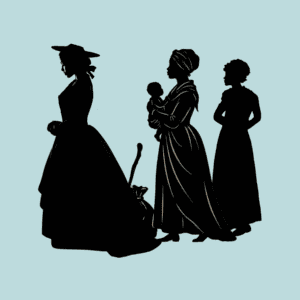
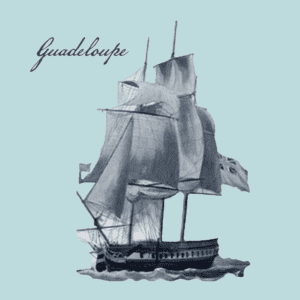
In October of 1779, after his release, George sent Dorothy by ship to Charleston along with an enslaved woman named Cloe; Cloe’s infant son Charlie; and another enslaved woman, Clarissa. The ship encountered a storm and suffered great damage. During the storm, Dorothy’s ship was then captured by the Guadeloupe, a 28-gun British Frigate. Dorothy and her party were moved to the British ship. Their own ship was lost to the storm.
The Guadeloupe finally came to port in Antigua, a British stronghold, where they were held for some months. The British confiscated the enslaved as ‘spoils of war to be sold at public auction.’ Owing to Dorothy Walton’s status as the wife of a member of Congress, the British agreed to return the enslaved woman, Cloe, to her as a servant. Dorothy then gave her captors 5 British guineas – probably equivalent to more than $1,000 today – and they allowed the infant Charles to be returned as well. Clarissa was sold at auction by the British on Antigua.
For a time, George Walton thought his wife had been lost with her ship at sea. Eventually, he received word of her capture. After an agreement for her release was reached, Dorothy, Cloe, and Charlie returned home. George Walton waited in Wilmington, North Carolina for their arrival. The group then went on to Philadelphia arriving by June of 1780. Walton again served in the Continental Congress, and the family lived in Philadelphia until late in 1782.
The New Republic
The Waltons returned to Georgia, and by 1783, they settled in Augusta. Throughout the rest of his life, George Walton would serve as Governor of Georgia; Chief Justice of the state; U.S. Senator; circuit court judge; and a Trustee of Richmond Academy, the town planners for Augusta. Dorothy Walton would have spent much of her life managing the Walton household and entertaining their family and political connections through the challenging early years of our American republic.
A Founding Mother
After returning to Georgia, George and Dorothy Walton had two sons. Thomas Camber Walton, who was born around 1783, and George Walton, Jr., who was born on January 19, 1789 in Augusta. In 1803, Thomas Walton passed away, probably from an illness. Only a few months later, on February 2, 1804, Dorothy also lost her husband, George Walton, who passed away after a short illness. His obituary stated that his health became much worse after the death of his eldest son.
Continuing Alone
Dorothy was then left alone to raise a young son, just 15 years old. George Walton, Jr. followed in his father’s footsteps to become a lawyer and join the military. He married Sally Walker in 1809 and the couple had two children, Octavia and Robert. Dorothy lived with the young family at Meadow Garden.
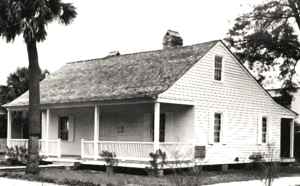
In 1821, George Walton, Jr. took a position as the Secretary for the Territory of West Florida. Dorothy Walton moved with her son and his family to Pensacola, Florida. Dorothy Camber Walton outlived her late husband by more than 28 years. She died on September 12, 1832, at the age of about 70. She is buried in Old St. Michael’s Cemetery in Pensacola, Florida. At one end of the wall is a bronze memorial plaque, placed long after her passing, with the inscription: “In Memory of Dorothy Walton, wife of George Walton, a Signer of the American Declaration of Independence.”